


Most homeowners don’t think about their panel until something trips. A breaker flips, power cuts off in part of the house, and you head to the basement or garage to reset it. If it keeps happening, that’s when you know something isn’t right.
We provide circuit breaker repair, electrical panel inspections, and panel upgrades across Southern Indiana every week. In older homes around Bloomington and Columbus, we often see panels that have not been touched in decades. In newer Bloomington homes, we see panels that were fine at move-in but are now pushed close to their limit once more load gets added.
Call (812) 372-8011today to schedule circuit breaker or electrical panel service in Southern Indiana. We can inspect your system, identify overload issues, and help you plan for safer, more reliable power throughout your home. Be sure to ask about our current special offers and available financing options.
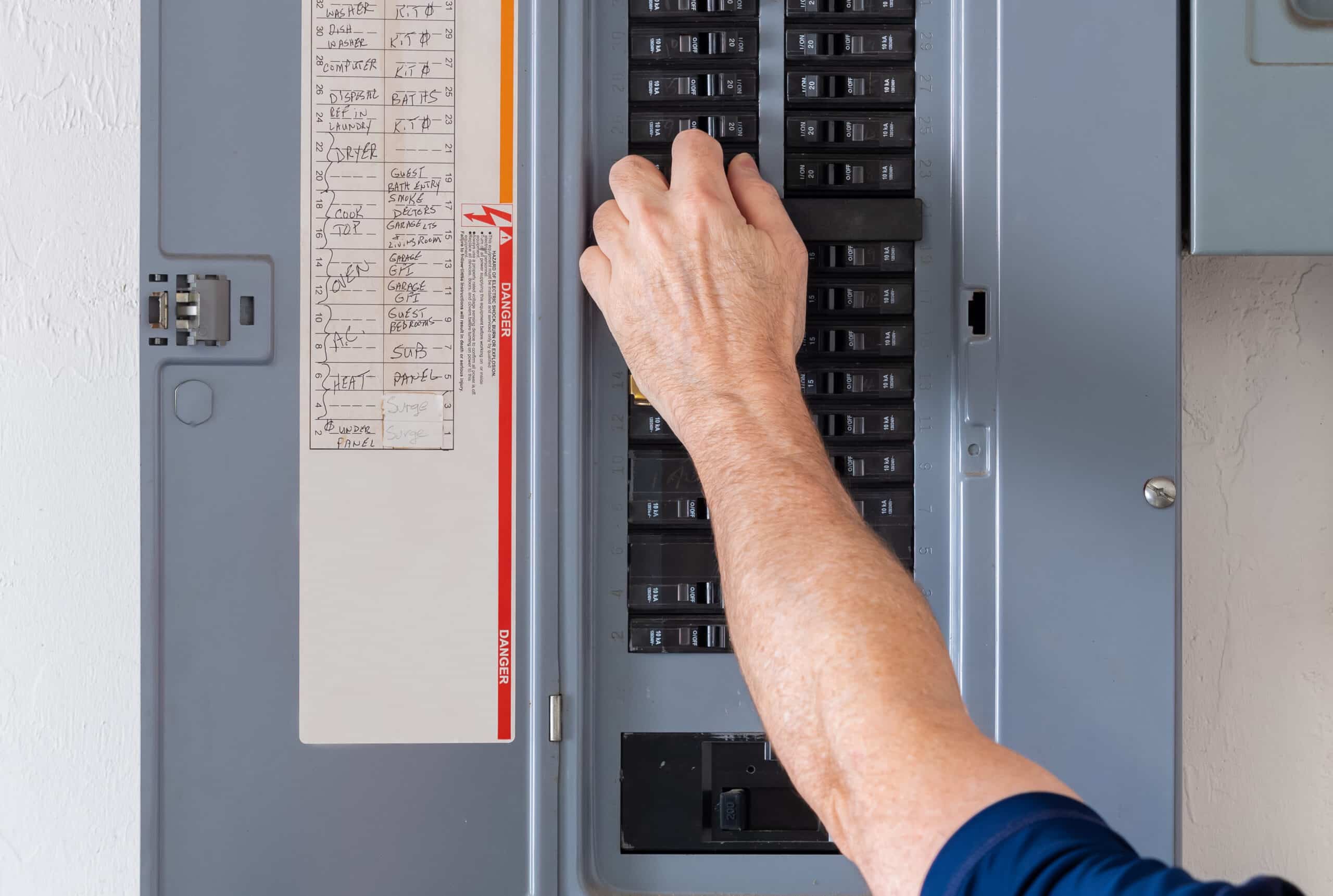
What Does Your Electrical Panel Handle in a Home?
Your panel is the control point for everything in your home. Every circuit runs through it. Every appliance, outlet, and light depends on it doing its job.
When the panel is sized right and set up correctly, you never think about it. When it is not, problems show up across the house.
We see panels in Southern Indiana that are still running at 100 amps, which was common years ago. Today, many homes need 150 to 200 amps just to keep up with normal use.
What Causes Circuit Breakers to Keep Tripping?
If your breakers keep tripping, it’s worth having the circuit checked so you know exactly what is causing it. A tripped breaker is not the problem. It is a warning sign that your system may be under strain or at risk for electrical hazards caused by overload or heat buildup. The breaker is shutting things down to prevent overheating or damage.
We see this a lot in Seymour and Bedford homes where multiple rooms share the same circuit. That setup worked years ago, but it does not hold up with modern demand.
Common reasons breakers trip include:
- Too many devices on one circuit
- Large appliances running at the same time
- Loose or failing connections
- Worn breakers that no longer hold load
- Panels that are already near capacity
If it is happening more than once in a while, something behind the panel needs to be looked at.
What Problems Can Show Up Inside an Electrical Panel?
Once we open a panel, the story usually becomes clear. After enough years in the field, you start to recognize the patterns.
In older Elizabethtown homes, we see circuits added over time with no real organization. In Madison, we find panels that are full, with no room left for expansion. Around Bloomington, newer homes often have panels that meet minimum requirements but leave no space for upgrades.
Typical issues we find:
- Overloaded circuits tied together
- Breakers that have been swapped multiple times
- Limited or no space for new circuits
- Signs of heat at connection points
- Panels that are outdated or undersized
Most of the time, the system is still working. It is just running too close to the edge.
How Do You Know When Your Electrical Panel Needs an Upgrade?
Not every issue means you need a new panel. But there are clear signs when an upgrade is the right move. If your home is older and still running on a 100-amp panel, you are likely close to capacity. In a lot of 70s and 80s homes around Bloomington and Franklin, that setup was standard. Today, it usually is not enough.
Panels over 25 to 30 years old should be looked at closely. We start to see wear in breakers, connections, and overall performance. Some insurance companies will also flag older panels as a risk, especially if they have not been updated.
We usually recommend upgrades when:
- The panel is 25 to 30 years old or older
- There is no room for additional circuits
- Breakers trip under normal use
- You are planning a remodel or addition
- You are adding high-demand equipment
Upgrading gives you more capacity, reduces strain across the system, and helps prevent future issues.
What Are Signs of a Failing Electrical Panel?
Some warning signs show up before a panel actually fails. The system may still be working, but it is under strain.
- Breakers trip more often than they used to
- Lights dim when larger appliances turn on
- You hear buzzing from the panel
- The panel feels warm to the touch
- You are out of space for new circuits
If you are noticing these, it is time to have the panel checked.
Why Doesn’t Replacing a Breaker Always Fix the Problem?
A lot of homeowners assume the breaker itself is bad. Sometimes that is true. Breakers can wear out over time. But most of the time, the breaker is reacting to something else. Replacing it without fixing the cause just resets the cycle.
We look at the full circuit before replacing anything. That includes the load, the wiring, and how everything is connected.
- Replace worn or faulty breakers
- Check load on the circuit
- Inspect wiring condition
- Confirm proper connections
- Make sure the panel can handle the demand
That is how you fix the issue instead of chasing it.
Can Your Electrical Panel Handle New Equipment?
Most of the calls we get for this end up being capacity issues, not bad equipment. Any time you add new equipment, the panel is where you start. We see problems when upgrades are done without checking capacity first.
In Bloomington, we see this a lot with EV chargers and finished basements. In Seymour and Bedford, it happens when kitchens or HVAC systems are upgraded without adjusting the panel.
Before adding anything, we look at:
- Available breaker space
- Total panel capacity
- Current load across circuits
- Future demand based on your plans
- Whether a subpanel or upgrade is needed
That planning step prevents problems later.
Planning a remodel, EV charger, HVAC upgrade, or new appliances? Schedule online to have your panel evaluated before overload issues, breaker trips, or capacity problems start showing up.
What Happens During an Electrical Panel Inspection?
We also look at how your system ties into major equipment like HVAC systems or future additions. A lot of panel issues show up when multiple systems draw power at the same time.
We keep it straightforward. We open the panel, check the layout, test the breakers, and look for signs of wear or overload. Then we walk you through what we found. No guessing and no vague answers.
- Check breaker condition and response
- Review panel capacity
- Look for heat or wear
- Identify overloaded circuits
- Explain next steps clearly
You leave knowing exactly where your system stands.
Why Does Local Experience Matter for Electrical Panel Work?
After working on enough homes around Southern Indiana, you start to spot issues before they fully show themselves. A panel in a 70s Elizabethtown home behaves differently than one in a newer Bloomington build that has had upgrades added over time.
That is what we bring to the table. We are not just checking boxes. We are looking at how your system actually runs and where it is likely to run into trouble.
Do not wait until your breakers start tripping after an upgrade. Schedule online today to check your panel capacity and make sure your system can safely support the additional load.